Pilot and chronograph watches often get lumped together because they look busy and capable, but they are two different ideas that frequently overlap. One is a style born in the cockpit; the other is a function that times events. Understanding each on its own makes the whole category far less intimidating for a new collector.
Where Pilot Watches Came From#
Pilot watches, sometimes called aviator or flieger watches, were designed when instruments were sparse and a glance had to deliver instant information. That history still shapes how they look and feel today.
The defining traits are about clarity under pressure:
- Large, legible dials so the time reads at a quick glance.
- High contrast, usually white markers on a black dial.
- Bold numerals and strong luminous coating for low-light visibility.
- A prominent crown, historically oversized so it could be adjusted while wearing gloves.
Because legibility drives the design, pilot watches tend to wear large. Diameters of 40mm to 44mm are common, and some run bigger. That presence is part of the appeal, but it is worth trying one on, since a big case can overwhelm a smaller wrist.
What a Chronograph Actually Is#
A chronograph is simply a watch with a built-in stopwatch. It can run continuously like any watch while also timing a separate event on command. The word describes a function, not a look, which is why you find chronographs in pilot, racing, dive, and even dressier styles.
You operate it with pushers, the buttons flanking the crown:
- The top pusher usually starts and stops the timing.
- The bottom pusher resets the elapsed time to zero.
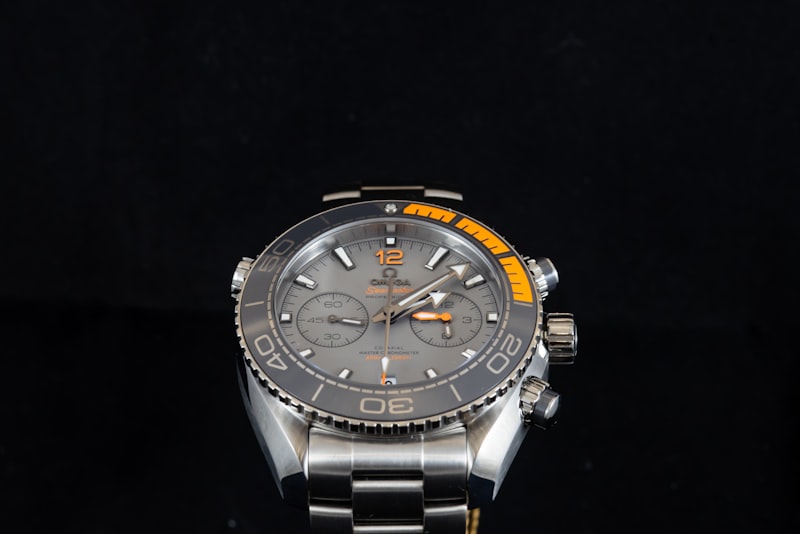
While timing, a central sweeping seconds hand tracks the event, and the regular running seconds move to a small subdial. This separation is why a chronograph dial looks more crowded than a standard one.
Reading the Subdials#
The little dials, called subdials or registers, are where new collectors get lost. Their job is to accumulate elapsed time so the central hand does not have to spin endlessly.
A typical layout includes:
- A minutes counter that ticks forward each time the central seconds hand completes a lap.
- An hours counter for longer timing.
- A running seconds subdial that shows the watch is alive while the chronograph is reset.
Layouts vary by movement, so do not assume every subdial means the same thing on every watch. Reading the dial text and the manufacturer's manual clears up any confusion quickly.
Movements: Automatic, Manual, and Quartz#
Chronographs come in all three movement types, and each behaves a little differently.
- Mechanical chronographs, whether automatic or hand-wound, are prized for their engineering. The mechanism that engages and disengages the timing function is genuinely complex, which is part of why mechanical chronographs cost more and benefit from regular servicing.
- Quartz chronographs are accurate, affordable, and often slimmer. Many use the subdials in flexible ways and can time to fractions of a second.
A practical note: running the chronograph constantly on some mechanical movements can increase wear over time, so check the manufacturer's guidance on how the timing function is meant to be used. Following the maker's servicing schedule keeps both the timekeeping and the chronograph mechanism reliable.
Tachymeters and Other Scales#
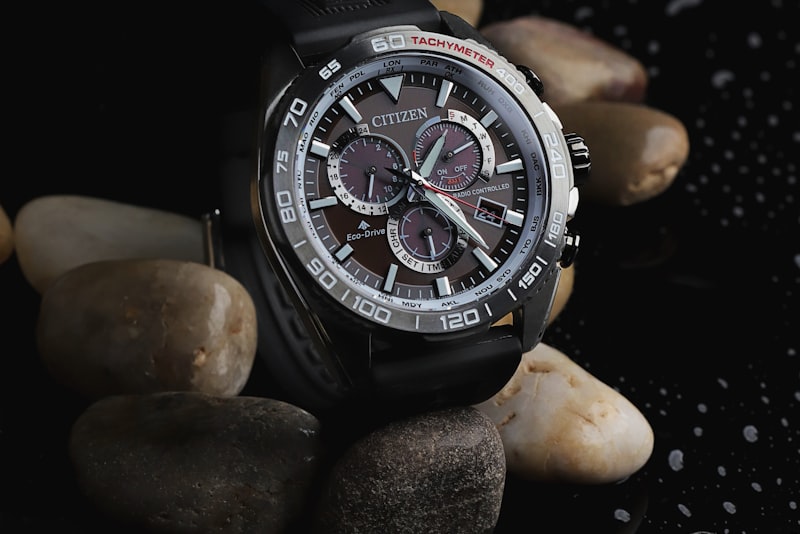
Many chronographs, especially racing-inspired ones, carry a tachymeter scale on the bezel or outer dial. It converts elapsed time over a known distance into a speed. In practice, you start the chronograph, stop it after a measured unit, and read the speed off the scale where the seconds hand lands.
It is a clever holdover from an era before digital speedometers, and most owners enjoy it as a design detail more than a daily tool. Pilot watches sometimes add a different scale entirely, such as a slide rule bezel for in-flight calculations, which adds even more visual complexity.
Water Resistance and Everyday Use#
Pilot and chronograph watches were not originally built around water, so check the rating before assuming. Many sit around 50m or 100m, which covers splashes, rain, and hand washing, with 100m offering enough margin for swimming on many models. As always, follow the manufacturer's specific water-resistance guidance, avoid operating pushers or the crown underwater, and remember that gaskets age and ratings are not permanent.
The pushers deserve respect too. Pressing them while the watch is wet can compromise the seals on many designs, so keep the timing function dry unless the maker explicitly says otherwise.
Pilot, Chronograph, or Both#
Because these are separate concepts, you have real choices:
- A pure pilot watch with no chronograph keeps the clean, legible dial and large crown.
- A pilot chronograph combines aviation styling with timing function, which is a classic and popular pairing.
- A non-pilot chronograph can be sporty, dressy, or vintage in flavor.
Pick based on how you want it to look and what you will actually do with it.
Buying Smart as a Beginner#
A few honest pointers before you commit:
- Mind the size. Pilot watches photograph smaller than they wear.
- Decide if you want the timing function. A chronograph adds cost and dial clutter you may not use.
- Buy pre-owned carefully. Verify the watch's authenticity and the seller's reputation, since chronographs are complex and a poorly serviced one can be expensive to repair.
Keep your expectations grounded. A watch is something to enjoy on the wrist, not a guaranteed financial investment, and resale values are unpredictable. None of this should be read as investment advice.
The Takeaway#
Pilot watches are about reading the time instantly, and chronographs are about timing events precisely. They often share a wrist, but knowing which trait you actually want, the bold legibility, the stopwatch function, or both, turns an overwhelming dial into a watch you understand and genuinely enjoy wearing.