Counterfeit watches have grown more convincing, but most still leave clues for a buyer who knows where to look. The best fakes can fool a quick glance, yet they rarely survive a careful inspection of printing, weight, movement, and the story around the sale. This guide walks through the red flags buyers most often miss so you can shop with a steadier eye and avoid paying real money for a fake.
Start With the Printing on the Dial#
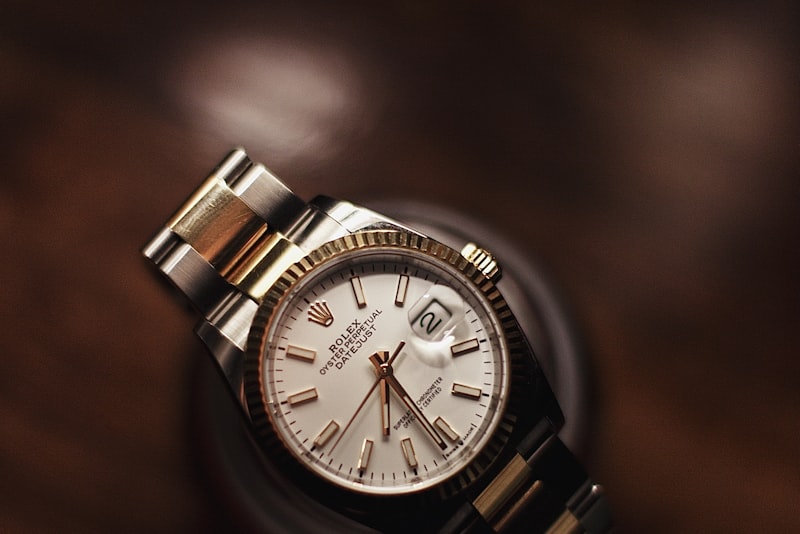
The dial is the hardest part to fake well, which makes it the first place to look. Genuine watches use precise printing with clean, evenly spaced characters and crisp edges, even under magnification.
- Fuzzy or thick text: Counterfeits often show printing that looks slightly blurred, bleeds at the edges, or sits unevenly.
- Misaligned details: Logos, text, and date windows that are off-center or crooked are strong warning signs.
- Wrong fonts and spacing: Compare the typeface and letter spacing against known reference images. Subtle differences in a single letter can betray a fake.
- Date wheel mismatch: The date number should be centered in the window with matching font and color.
A loupe is your friend here. Sloppy printing is one of the easiest giveaways and one many buyers skip because they trust a glossy photo or a confident seller.
Feel the Weight and Materials#
Authentic watches built from quality metals and components have a certain heft and balance. Many counterfeits cut costs with lighter materials, so a piece that feels surprisingly hollow or toy-like for its size deserves suspicion.
Pay attention to finishing as well. Real cases tend to have clean, consistent brushing and polishing, smooth edges, and well-machined details. Rough edges, uneven surfaces, sloppy engraving, or a bracelet that rattles loosely can all point to a fake. The crown and any pushers on a genuine watch usually operate with a precise, deliberate feel rather than a vague, gritty one.
Listen to and Watch the Movement#
The movement often exposes a counterfeit even when the exterior is convincing. How the watch keeps time tells you a lot.
- Seconds hand behavior: Many genuine mechanical and automatic watches have a seconds hand that sweeps smoothly. A fake imitating one of these may instead tick once per second, revealing a cheap quartz movement hidden inside.
- Smoothness of operation: Setting the time and winding should feel refined. Stiffness, grinding, or excessive looseness suggests low-grade internals.
- Accuracy and function: Check that the date changes cleanly around midnight and that any subdials or complications actually work rather than being decorative.
If a watch advertised as a self-winding automatic does not respond to wrist motion, or ticks like a basic quartz, treat that as a serious red flag.
Scrutinize Engravings, Serials, and Case Back#
Counterfeiters frequently get the small permanent details wrong. Engravings on a genuine watch are typically deep, sharp, and precisely aligned, while fakes can show shallow, fuzzy, or uneven markings.
Check that serial and reference numbers are present where they should be and that they look correctly machined rather than stamped crudely. Some authentic models use a solid case back, others a display back, so a back that does not match the known design for that reference is suspicious. Mismatched details between the case back, the dial, and any paperwork are a common tell.
Weigh the Story and the Price#
Sometimes the strongest clue is not the watch at all but the situation around it. A price that seems too good to be true almost always is, and steep discounts on desirable models are a classic lure.
Look closely at the seller and their account. Warning signs include:
- Reluctance to provide additional photos or to show the movement.
- Pressure to buy quickly or to pay through untraceable methods.
- A history that is thin, brand new, or full of vague listings.
- Claims that documentation is unavailable for unconvincing reasons.
Verify both the authenticity of the watch and the reputation of the seller before buying pre-owned. When something about the story feels rushed or evasive, trust that instinct and walk away.
Get Expert Eyes When the Stakes Are High#
For an expensive watch, your own inspection is a great filter but not the final word. A qualified watchmaker or a reputable authentication service can open the case, examine the movement, and confirm details that are invisible from the outside.
A small inspection or service fee is cheap insurance against a costly mistake. If a seller resists allowing an independent check before or shortly after purchase, that resistance is itself informative. Buying through sellers who offer a return window gives you the breathing room to get that verification done.
Keeping Perspective on Value#
It is worth remembering why authenticity matters so much beyond pride of ownership. A genuine watch holds its value and can be serviced with proper parts, while a fake is essentially worthless and unsupportable. That said, even genuine watches are not guaranteed financial investments, so the goal of spotting fakes is to avoid being cheated, not to chase guaranteed profit.
Conclusion#
Spotting a fake watch comes down to disciplined attention: examine the dial printing, feel the weight and finishing, study the movement, inspect engravings, and read the seller and price with healthy skepticism. None of these checks is hard on its own, and together they catch the vast majority of counterfeits. Slow down, verify before you pay, and bring in an expert when the price is high, and you will keep your money where it belongs.